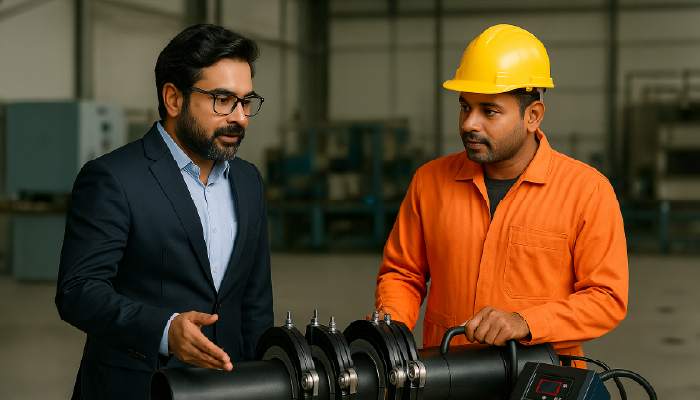
Essential Quality Control for Geomembrane Welding
and Plastic Fabrication
In geomembrane installation, weld quality determines project success. Yet many Indian contractors skip systematic weld testing, relying solely on visual inspection—a practice that leads to costly weld failures and project delays. Air pressure testing provides fast, reliable weld integrity verification that prevents expensive rework.

Understanding Geomembrane Weld Testing
The challenge with welded geomembranes is that critical weld defects remain invisible to visual inspection. A professionally executed weld seam can harbor serious integrity problems:
Incomplete fusion in the weld zone
Pinholes and micro-leaks within seam channels
Weak spots from inconsistent welding temperature
Discontinuities from insufficient pressure during welding
Post-weld damage from handling or stress
Visual inspection catches obvious surface defects but cannot verify internal weld integrity. Air pressure testing for geomembranes provides the missing quality assurance layer.
How Geomembrane Air Pressure Testing Works
Air pressure weld testing is a precise, non-destructive method for validating double-seam weld quality in geomembrane liner installation and plastic sheet fabrication.
The Testing Process
Modern geomembrane welding equipment creates double-seam welds—two parallel weld lines with an air channel between them. This design enables reliable weld seam testing.
60-Second Weld Verification Process:
Insert a stainless-steel hollow needle into the air channel between double seams
Pressurize the channel to specified test pressure (2-3 Bar per DVS standards)
Monitor the precision pressure gauge for 60 seconds per weld joint
Stable pressure reading confirms leak-free weld integrity
Pressure drop indicates weld failure requiring repair
This geomembrane testing method takes just one minute per joint, making it practical for comprehensive quality control during installation.
Durel Air Pressure Test Kit: India's Quality Control Solution
At Durel International, we developed our own air pressure testing equipment specifically for Indian geomembrane contractors and plastic fabricators who need reliable weld quality verification without premium import pricing.
Technical Specifications for Weld Integrity Testing
Pressure Range: 0–6 Bar (0–100 PSI) accommodates various thermoplastic materials and geomembrane types
Professional Components:
Stainless-steel hollow needle for durability and precise weld channel insertion
Flexible tubing for easy field operation
High-precision pressure gauge for accurate, repeatable weld testing
Design for Indian Conditions: Built for portability, durability, and ease of use in diverse field environments—essential for on-site geomembrane quality control.
Why Durel Created This Weld Testing Solution
Instead of distributing expensive imported geomembrane testing equipment, we engineered our own air pressure test kit to provide Indian contractors with dependable weld quality verification at fair value. This reflects our commitment to supporting customer success through practical quality control tools.
When to Use Air Pressure Testing vs. Other Methods
Air pressure weld testing is the preferred method for double-seam geomembrane verification, especially when alternative testing approaches prove impractical.
Ideal Applications for Weld Seam Testing
Geomembrane Liner Installation: Pond liners, reservoir containment, landfill systems, mining tailings, and industrial containment requiring leak-proof integrity.
Plastic Tank Fabrication: Welded joints in fabricated thermoplastic tanks, vessels, and containment systems.
Large-Scale Plastic Sheet Welding: Applications involving HDPE, LDPE, PVC, or PP sheet materials joined with double-seam welding equipment.
Advantages Over Alternative Testing Methods
Visual Inspection Limitations: While visual weld inspection should always be performed first, it cannot confirm internal fusion quality. Many professional-looking welds contain hidden defects only air pressure testing reveals.
Water Testing Drawbacks: Water-based weld testing is time-consuming, requires extensive setup, creates mess, and lacks precision compared to pressure gauge verification.
Speed and Documentation: Air pressure testing delivers immediate, quantifiable weld quality results. Stable pressure readings provide objective documentation for quality records and project compliance.
International Standards for Geomembrane Weld Testing
Air pressure testing aligns with internationally recognized quality standards guiding geomembrane welding and thermoplastic fabrication.
Key Weld Quality Standards
DVS 2225-2: Specifies air pressure test requirements for different materials:
PVC-P geomembranes: 2 Bar test pressure
PE (Polyethylene) liners: 3 Bar test pressure
Material-specific testing protocols ensure proper weld verification
ISO 9862 and ASTM D7177: Cover geomembrane seam testing and weld integrity verification providing frameworks for quality assurance.
Indian Market Adoption
While specific BIS standards for geomembrane air pressure testing continue evolving, leading Indian EPC contractors, quality consultants, and project engineers increasingly mandate weld testing in infrastructure projects, containment systems, and waterproofing applications.
This reflects growing recognition that international quality benchmarks ensure long-term geomembrane performance and project success.
The Economics of Weld Testing vs. Weld Failure
Understanding return on investment for weld quality testing becomes clear when comparing prevention costs against failure consequences.
Cost of Geomembrane Weld Failures
Material Loss: Failed weld sections require cutting and replacement, wasting original material plus new material for repairs.
Labor Rework: Installation crews must return to site, remove failed sections, prepare replacements, re-weld, and re-test—often exceeding original installation labour costs.
Project Delays: Discovering weld failures during commissioning or after system operation creates cascading schedule delays affecting project completion.
Reputation Damage: Project owners remember which contractors deliver quality geomembrane installation and which cut corners on quality control. Poor weld quality directly impacts future project opportunities.
System Failure Liability: In containment applications, failed welds lead to environmental contamination, regulatory issues, and liability concerns far exceeding original project value.
The Quality Control Investment
Air pressure testing equipment typically represents less than 1% of total geomembrane project costs. Yet this investment prevents weld failures causing 5-10% or more in rework and material loss.
Routine weld testing ensures seam integrity, standards compliance, and long-term liner performance reliability. The ROI extends beyond financial benefits to professional credibility and client confidence.
Critical Industries Requiring Weld Integrity Testing
Certain applications make geomembrane weld testing non-negotiable due to failure consequences.
Mission-Critical Geomembrane Applications
Landfill Liners and Waste Containment: Environmental regulations and groundwater protection require verified leak-proof welds. Air pressure testing provides mandatory documentation.
Water Treatment and Storage Systems: Municipal and industrial water infrastructure cannot tolerate leakage. Systematic weld testing ensures public health protection.
Chemical Containment: Chemical plant secondary containment and process systems require perfect weld integrity for environmental safety and regulatory compliance.
Agricultural Pond Liners: Irrigation and aquaculture investments depend on water retention. Faulty geomembrane welds cause water loss and economic damage.
Mining Tailings Management: Large-scale mining containment systems require robust weld quality control for environmental protection and operational reliability.
Any project where leak-proof geomembrane performance is critical benefits from air pressure weld testing in quality assurance protocols.
Current Reality: Many Skip Weld Testing
Despite clear benefits and minimal cost, many Indian installation teams don't routinely test geomembrane weld joints.
Some rely solely on visual inspection. Others use informal methods lacking quantifiable results. Many assume experienced welding crews don't make mistakes.
This approach works—until it doesn't. When weld failures occur, remediation costs far exceed implementing proper testing.
Why Contractors Skip Weld Quality Control
Lack of awareness about air pressure testing methods
Assumption that weld testing equipment is expensive
Over-reliance on visual inspection and welder experience
Schedule pressure to complete installations quickly
Absence of client-specified testing requirements
None of these justify skipping weld verification. Systematic testing actually accelerates projects by catching problems immediately when repairs are simple, rather than discovering failures later when correction is disruptive and expensive.
Implementing Air Pressure Testing in Your Workflow
Adding geomembrane weld testing to quality assurance is straightforward and delivers immediate benefits.
Quality Control Workflow
Complete Weld Section: Finish each double-seam weld per proper procedures
Visual Inspection: Check for obvious surface defects first
Air Pressure Test: Insert needle, pressurize to specification, observe 60 seconds
Document Results: Record test pressure and pass/fail results for quality records
Address Failures: If pressure drops, locate leak, repair weld, and re-test
Proceed Confidently: Move to next section knowing completed welds meet quality standards
This workflow adds minimal time but dramatically increases finished geomembrane system reliability.
Training Requirements
Operating air pressure testing equipment requires no specialized technical background. Installation crews learn the weld testing process quickly and integrate it naturally into welding workflow.
The key is making testing standard procedure, not optional. When every weld gets tested, quality becomes consistent and verifiable.
Durel's Partnership Approach to Quality
At Durel International, we partner with contractors serious about geomembrane installation quality and professional differentiation through superior workmanship.
Our Air Pressure Test Kit reflects this philosophy—practical, reliable weld testing equipment designed to help you deliver better results while protecting reputation and profitability.
What Durel Provides
Quality Equipment: Weld testing tools engineered for durability and precision in field conditions
Fair Value: Professional-grade geomembrane testing capability without premium import pricing
Technical Support: Guidance on implementing weld testing protocols and interpreting pressure test results
Partnership Commitment: We're invested in your success because your quality reflects our commitment to Indian contractors
Conclusion: Verified Quality for Long-Term Success
Geomembrane welding work installed today will serve its purpose for years or decades. Whether that service is trouble-free or marked by failures, repairs, and reputation damage depends on weld quality verification.
Air pressure testing transforms geomembrane welding from skilled work with uncertain results into a verified process with documented quality assurance.
Choose Quality Verification
Continue relying on visual inspection and hope problems don't emerge—or implement simple, affordable weld testing that confirms integrity at every joint.
The investment is minimal. The peace of mind is invaluable. The professional credibility built by delivering consistently high-quality geomembrane installation opens doors to better projects and stronger client relationships.

Ready to implement systematic geomembrane weld testing?
Contact Durel International about our Air Pressure Test Kit for reliable weld quality verification according to international standards. Quality you can verify is quality you can trust.